

The answer exists. Finding it is the frustrating part. Most wealth owners have experienced it.
A question comes up during a meeting, over dinner or while reviewing a new investment opportunity. How much liquidity do we currently have available? What is our total exposure to private markets? How has the portfolio changed over the past year?
The answer almost always exists somewhere. A report contains part of it. An advisor has another piece. A manager provides additional information. A spreadsheet, a PowerPoint presentation, or quarterly review fills in the remaining gaps.
The frustration is rarely a lack of information. It is having to piece the information together before a clear answer emerges.
As wealth grows, so does the number of people, investments and entities involved in managing it. Additional managers are appointed. New investments have been added. Private assets become a larger part of the portfolio. Specialists contribute expertise in different areas. All of these decisions are often made for good reasons.
Yet each addition quietly creates more distance between the wealth owner and a clear view of the whole. No single advisor sees everything. No single report captures it all. The picture exists; it is just never in one place.
At some point, the challenge is no longer managing wealth. It is maintaining a clear understanding of it.
The questions wealth owners most want answered are rarely complicated. What do I actually own today? Where is my liquidity concentrated? What has changed since our last review?
They are straightforward questions. But straightforward questions should not require pulling together reports from four different sources before an answer becomes visible.
As portfolios become broader and more diversified, gaining a complete overview can require significantly more effort than it should. Time that could be spent discussing opportunities, family priorities or long-term plans is instead spent locating and validating information that already exists.
When information is spread across different managers, reports and advisors, it becomes more difficult to maintain confidence that nothing important is being missed. Not because the information is unavailable, but because it takes effort to connect the pieces.
The value of a complete picture is not simply knowing more. It is the confidence that comes from knowing nothing important has been missed. That confidence changes the nature of the conversation, from one spent locating information to one spent actually using it.
The relationship between a wealth owner and a Multi Family Office is built on trust. Part of that trust comes from investment expertise, advice and stewardship. Another part comes from confidence that the full picture is visible, understandable and available when needed.
The most valuable client experience is not necessarily the one that provides the most information. It is the one that creates the greatest clarity. Wealth owners should not have to assemble the puzzle before they can see the picture. Understanding your wealth should become easier as it grows, not harder.
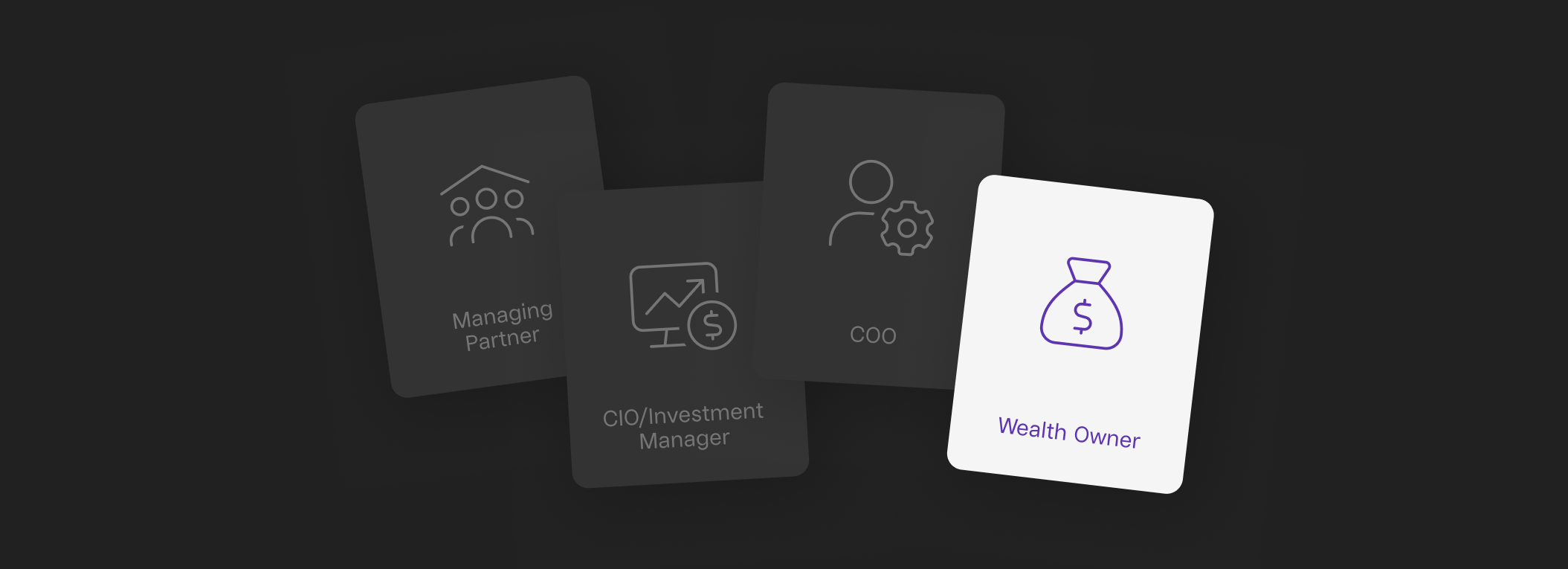
No investmentdecision, operational challenge or client relationship exists in a vacuum.Inside the Multi Family Office, every role feels the pressure differently.
Related articles:
→ How modern Multi Family Offices scale without sacrificingclient experience
→ The investment picture is only as strong as theconfidence behind it
→ The real operational risk is often invisible until theorganisation starts scaling
Target Solutions
Making the complex simple. Created by asset managers for asset managers.
Private banking, redefined. Offer your clients a complete view of their wealth and empower your team with the tools to deliver truly personalized advice. From listed to unlisted assets - built on reliable data that drives better decisions and strengthens client relationships.
→
Deliver a fully consolidated view of your wealth
→
Behind every great advisor is a great system
→
Stand out with a modern digital experience
→
Help advisors stay one step ahead

Our platform offers a way for Asset Managers to differentiate themselves from their peers through cutting-edge digital services, driving new business and increasing customer loyalty.
→
Improve customer experience
→
Empower advisors with total portfolio control
→
Benefit from professional data management
→

Our all-in-one solution empowers Family Office professionals to prioritize asset management while delivering customized, cutting-edge reports and visualizations to their stakeholders.
→
Improve customer stakeholders experience
→
Visualize complex structures in a simple, yet accurate way
→
Empower Family Office professionals with total portfolio control
→
Reduce costs

Our comprehensive solution enables Private Investors to effortlessly maintain control over their total wealth and monitor the performance of their investments and partners.
→
All assets in one place, accesible anywhere at any time
→
Gain a holistic view of your entire wealth
→
Empower yourself to do better investment decisions
→

Our all-in-one solution empowers Institutional Investors to prioritize portfolio management and supervision while delivering customized, cutting-edge reports and visualization to their stakeholders.
→
Gain a holistic view of the portfolio
→
Simplify data aggregation
→
Benefit from ready-made visualizations and reports
→
Improve data accuracy

Our platform enables Fund Companies and GPs to differentiate themselves from their peers through cutting edge reports and digital services, driving new business and increasing customer loyalty.
→
Empower clients with actionable insights
→
Improve operational efficiency
→
Reduce cost
→

With our Operational Services, you can redirect your attention to your core business, reducing expenses and taking advantage of a specialized team of professionals.
→
Focus on your core business
→
Tailored management services
→
Portfolio data management
→
Reduce cost
Offering
We offer a user-friendly platform that seamlessly integrates data management, reporting, and analysis to deliver actionable insights and to support informed financial decision making.

Bringing portfolio control to the next level

A consolidated view of total wealth, improving financial planning of intricate client structures.

Simplifies portfolio creation and changes for investment professionals.

Improves customer experience and insights into wealth composition

Master your private assets with greater precision

Saving valuable time and costs by increasing efficiency and streamlining operations.